ByJohn A
Practical Planning for Laboratory Thermal Testing
Laboratory testing becomes more effective when equipment, procedures, and workspace are planned together. Temperature-controlled testing is often used during research and product development to understand how components and materials respond to different environmental conditions.
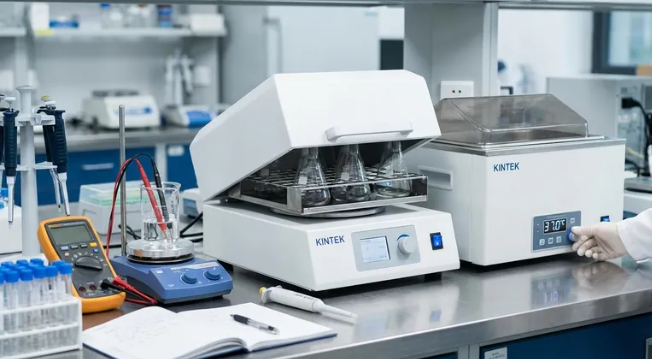
For applications involving smaller samples, desktop thermal equipment can offer a practical way to conduct controlled tests within an established laboratory. The selection process should begin with a clear understanding of the intended testing program.
Identify the Purpose of the Testing Program
Before choosing equipment, laboratory managers should define why temperature testing is required.
The objective may be to evaluate a new material, examine a prototype, compare components, or perform routine quality testing.
Once the objective is clear, it becomes easier to identify the environmental conditions that need to be reproduced.
See also: How To Find A Modern Condo That Matches Your Lifestyle And Budget
Define Temperature Requirements
The temperature range should be documented clearly.
Researchers should establish the lowest and highest required temperatures and determine whether the test requires constant exposure or temperature changes over time.
Other factors, such as stability and uniformity, may also be important depending on the test.
Determine the Required Chamber Capacity
The internal working volume should match the samples.
Users should consider sample dimensions, quantity, fixtures, sensors, and any other equipment that will be placed inside.
Selecting a chamber with appropriate capacity helps avoid unnecessary limitations during testing.
Plan the Laboratory Layout
The equipment’s physical location should be determined before installation.
The chamber should be accessible to operators and maintenance personnel. There should also be sufficient space around it according to the manufacturer’s requirements.
Good placement can make sample loading and testing more efficient.
Integrate the Chamber Into the Workflow
A testing chamber should not operate as an isolated piece of equipment.
Sample preparation, environmental exposure, measurement, and analysis are all connected.
Placing the chamber close to relevant workstations can reduce unnecessary movement and make the overall testing process more organized.
Review Temperature Control Features
Temperature control features should be compared according to the application.
Researchers may need programmable temperature profiles, stable set points, monitoring functions, or other controls.
The equipment should support the testing procedure without adding unnecessary complexity.
Establish Standard Procedures
A written standard operating procedure can help laboratories maintain consistency.
The procedure should explain how to prepare samples, configure the chamber, conduct testing, monitor conditions, and record results.
Standardized procedures are particularly valuable when several technicians use the same equipment.
Monitor Environmental Conditions
Testing should include appropriate monitoring of the chamber conditions.
Researchers need confidence that the intended environment was maintained throughout the test.
Depending on the application, temperature data may be recorded manually or through available monitoring functions.
Maintenance and Calibration
Regular equipment maintenance should be included in the laboratory’s schedule.
Cleaning and inspection can help maintain the chamber’s operating condition. Calibration may also be required depending on the equipment, measurements, and quality system.
Maintenance and calibration records should be retained where appropriate.
Consider Equipment Support
Technical support can be an important consideration when purchasing laboratory equipment.
Users may need operating documentation, troubleshooting assistance, maintenance services, or replacement parts during the equipment’s service life.
Evaluating available support can be useful when comparing different options.
Future Testing Needs
Laboratories should consider realistic future requirements before making a purchase.
If upcoming projects are likely to involve larger samples or different temperature conditions, those requirements may influence equipment selection.
However, buying significantly more capacity than the laboratory is likely to use can unnecessarily increase costs and space requirements.
For organizations comparing LIB industry desktop thermal chambers the best approach is to compare available specifications against a clearly documented testing plan.
Safety and Staff Responsibilities
Laboratory staff should understand their responsibilities when operating environmental testing equipment.
This includes following operating instructions, using compatible samples, observing temperature limits, and reporting equipment problems.
Appropriate training and documented procedures can support safer and more consistent laboratory operation.
Reviewing the Complete Testing Process
Equipment selection is only one part of successful environmental testing.
Laboratories should also review sample preparation, test conditions, measurement methods, data recording, maintenance, and final analysis.
A complete process helps ensure that the equipment is used effectively.
Frequently Asked Questions
1. What should be considered when planning laboratory thermal testing?
Important factors include the test objective, temperature range, sample size, chamber capacity, environmental control, monitoring, installation, maintenance, and staff procedures.
2. Are desktop systems useful for small research projects?
They can be useful when the samples are small and the required temperature conditions fall within the equipment’s specifications.
3. Why should future requirements be considered?
Considering realistic future projects can help laboratories select equipment that remains useful as testing activities develop.
Conclusion
Successful thermal testing requires careful coordination between equipment, procedures, laboratory layout, and research objectives.
Desktop environmental testing solutions can provide a practical option for laboratories working with smaller samples and limited space. However, equipment should always be selected according to measurable testing requirements rather than appearance or size alone.
By defining the testing objective, selecting suitable specifications, establishing repeatable procedures, maintaining the equipment, and training staff properly, laboratories can create a reliable foundation for temperature-controlled research and product development.