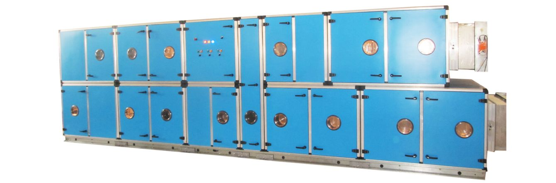

Air handling systems in healthcare and controlled manufacturing environments must do more than regulate temperature and airflow. They also need to limit the accumulation and circulation of dust, moisture and microbial contamination within the ventilation system. A poorly designed unit can create areas where dirt collects, condensate remains or maintenance becomes difficult. These conditions can compromise indoor air quality and make consistent hygiene management harder. A hygienic air handling unit addresses these concerns through carefully selected materials, accessible components, effective filtration and construction that supports regular inspection and cleaning.
Hygienic AHUs are designed for applications where ventilation conditions have a direct relationship with occupant safety, product quality or process control. Hospitals, pharmaceutical manufacturing facilities, laboratories and cleanrooms may have different airflow and filtration requirements, but they share the need for controlled air quality. The unit must maintain the specified operating conditions while allowing maintenance teams to inspect internal surfaces and components. Hygiene therefore needs to be considered during equipment selection, system design, installation and ongoing operation.
Internal Construction and Cleanable Surfaces
The internal surfaces of a hygienic AHU should be smooth, durable and resistant to corrosion. Rough finishes, exposed insulation and poorly sealed joints can create locations where dust and moisture accumulate. Stainless steel, including suitable grades such as SS 304, is commonly considered for internal panels and components because of its corrosion resistance and cleanability. Aluminium and other materials may also be appropriate when their properties meet the application’s requirements. Material selection should account for cleaning chemicals, humidity, temperature and the expected service environment.
The casing design is equally important. Panels should provide adequate mechanical strength, reliable sealing and insulation without exposing porous materials to the airstream. Internal corners and component transitions should be designed to reduce dirt traps and make cleaning practical. Access doors need secure closures and suitable gaskets to limit uncontrolled air leakage. The complete construction should support inspection without requiring unnecessary dismantling.
Key construction features to assess include:
- Smooth internal surfaces: Reduce locations where dust and deposits can collect.
- Corrosion-resistant materials: Help maintain casing integrity in humid or frequently cleaned environments.
- Sealed panel joints: Limit air leakage and prevent exposed insulation from contacting the airstream.
- Microbial inertness: Materials exposed to airflow should be assessed for their suitability under relevant testing methods, such as ISO 846.
- Accessible inspection panels: Allow maintenance teams to examine internal components and clean the unit.
- Durable gaskets and seals: Support consistent casing performance throughout the equipment’s service life.
See also: Can Salaried Employees Qualify For Overtime Pay?
Drainage, Moisture Control and Component Hygiene
Condensate management is a major part of hygienic HVAC design. Cooling coils can produce water when humid air passes over surfaces below its dew point. If this moisture is not drained effectively, standing water can encourage microbial growth and contribute to corrosion or unpleasant odors. Drain pans should therefore be corrosion-resistant, properly sloped and configured to support complete drainage. Drain connections and traps also need to be accessible for inspection and cleaning.
A hygienic AHU should prevent water from remaining in unintended locations. The drain pan must extend appropriately beneath the coil, while its geometry should avoid stagnant areas. Insulation and casing details should be selected to reduce condensation on external and internal surfaces. Maintenance personnel should be able to inspect the drain pan, trap and surrounding components without extensive equipment disassembly. Moisture control must be considered alongside filtration because clean filters cannot compensate for poor drainage or persistent dampness inside the unit.
Filtration and Air Treatment Requirements
Filtration protects the air supplied to occupied or controlled spaces and helps prevent dust from accumulating on downstream components. A hygienic AHU may use multiple filtration stages, with the arrangement determined by outdoor air quality, room classification, process requirements and applicable design standards. Coarse and fine filters can remove progressively smaller particles, while HEPA filters may be required where high-efficiency particulate removal is specified. Filter housings must provide reliable sealing so that air does not bypass the filter media. Differential pressure monitoring helps maintenance teams identify increasing resistance and determine when filters need replacement.
Filter selection should be based on the required particle removal performance rather than a general assumption that every hygienic system needs the same filter arrangement. Healthcare ventilation and pharmaceutical cleanrooms are governed by different room requirements, risk assessments and operating procedures. A filter suitable for a general hospital area may not meet the requirements of a controlled manufacturing zone. Designers should also consider filter access, safe replacement procedures and the prevention of contamination during maintenance.
Important filtration considerations include:
- Filter efficiency: Match the filtration stage to the particle control requirements of the served space.
- Filter sealing: Prevent untreated air from bypassing the filter assembly.
- Housing design: Provide secure installation and practical access for replacement.
- Pressure monitoring: Track filter loading and identify abnormal airflow resistance.
- Maintenance procedures: Reduce the risk of releasing accumulated contaminants during filter changes.
- Downstream cleanliness: Protect coils, fans and ductwork from avoidable particulate buildup.
UV Treatment and Other Hygiene Measures
Ultraviolet germicidal irradiation, commonly using UV-C, may be included in selected air handling systems as an additional microbial control measure. Its effectiveness depends on factors such as exposure time, irradiance, distance, airflow velocity and the susceptibility of the target microorganisms. UV treatment should not be regarded as a replacement for filtration, surface cleaning, drainage management or appropriate maintenance. The equipment must be designed to prevent harmful UV exposure to maintenance personnel and occupants. Material compatibility also matters because prolonged UV exposure can degrade certain plastics, seals and other components.
The decision to include UV treatment should follow an assessment of the system’s hygiene risks and operational requirements. The location of lamps, access arrangements, electrical safety and replacement intervals need to be documented. Where UV systems are installed, maintenance teams should have clear procedures for inspection and safe servicing. A hygienic design uses UV as one possible part of a broader control strategy rather than relying on it as the primary means of maintaining clean air.
Standards Relevant to Hygienic Air Handling Units
Standards provide a framework for evaluating hygienic design, installation and operation. VDI 6022 Part 1 addresses hygiene requirements for ventilation and air-conditioning systems and units, including their design, construction and operation. It supports a lifecycle approach to hygiene rather than focusing only on the equipment at the point of purchase. Its considerations extend to components and the conditions under which the system is installed and maintained. Project teams should consult the applicable edition and determine how its requirements relate to the specific facility.
DIN 1946-4 addresses ventilation and air-conditioning systems in healthcare buildings and rooms. It is particularly relevant when planning ventilation for clinical environments where room use and airflow conditions influence the design. The 2018 edition has a published amendment, DIN 1946-4/A1:2025-11, so project specifications should account for the applicable current documents. The standard should not be treated as a universal specification for every cleanroom or pharmaceutical process. Designers need to identify the regulations and technical requirements that apply to the intended room classification and use.
AHRI certification has a different role. The Air-Conditioning, Heating, and Refrigeration Institute operates voluntary certification programs for qualifying HVACR products and components. Certification can provide independently verified performance information within the scope of a particular program. However, AHRI certification alone does not establish that an AHU meets every hygienic requirement under VDI 6022 or DIN 1946-4. Procurement teams should check the exact product, certification scope and supporting documentation rather than treating all certificates as interchangeable.
System Integration and Energy Considerations
A hygienic AHU operates as part of a larger ventilation system. Fans, coils, dampers, filters, controls and duct connections must work together to deliver the required airflow and environmental conditions. Energy recovery can reduce the energy needed to condition incoming outdoor air, provided the selected equipment is suitable for the hygiene requirements and the risk of cross-contamination is properly addressed. A heat recovery ventilation system can transfer energy between exhaust and supply airstreams, helping reduce heating or cooling demand. Its suitability depends on the recovery technology, leakage characteristics, air-stream separation and the application-specific hygiene assessment.
Cooling components also need to be selected according to the required indoor conditions. A cooling module can provide evaporative cooling in systems designed for that purpose, but it introduces moisture into the air and is not automatically suitable for every healthcare or cleanroom application. Designers must assess humidity limits, water hygiene, droplet carryover and the possibility of microbial growth. Any cooling or energy recovery component installed in a hygienic AHU should be evaluated as part of the complete system rather than as an isolated efficiency upgrade.
Maintenance Access and Lifecycle Management
Even a well-designed AHU can lose hygienic performance if inspection and maintenance are neglected. Access doors should allow technicians to reach filters, coils, drain pans, fans and other components safely. Internal surfaces need to be accessible for cleaning, while removable components should be designed for practical servicing. Maintenance schedules should reflect operating hours, incoming air quality, filter loading and the conditions inside the unit. Records of inspections, cleaning, filter changes and repairs help demonstrate that hygiene controls are being maintained.
Before approving equipment, project teams should review:
- Internal material specifications and corrosion resistance.
- Casing leakage, insulation and panel construction details.
- Drain pan design, drainage arrangements and access.
- Filter stages, efficiency documentation and sealing provisions.
- UV system safety and maintenance requirements, where installed.
- Inspection clearances, cleaning procedures and component replacement access.
- Applicable standards, test reports and certification documentation.
Conclusion
A hygienic air handling unit is defined by more than its filtration capacity or casing material. Its construction must limit dirt accumulation, manage condensate, support effective filtration and provide practical access for inspection and cleaning. Standards such as VDI 6022 and DIN 1946-4 help guide design decisions, while AHRI certification can provide performance verification within its specific scope. The correct specification depends on the facility, room requirements, air quality targets and maintenance strategy. For guidance on hygienic AHU configurations and application requirements, contact Desiccant Rotors International.
Frequently Asked Questions
1. What is a hygienic air handling unit?
A hygienic air handling unit is designed to condition and distribute air while supporting strict cleanliness and maintenance requirements. It typically includes cleanable internal surfaces, suitable casing materials, effective filtration, proper drainage and accessible components. These features help reduce contamination risks within the ventilation equipment.
2. What is the difference between a standard AHU and a hygienic AHU?
A hygienic AHU places greater emphasis on cleanability, material suitability, moisture management, sealing and maintenance access. Its internal construction is designed to reduce areas where dirt or moisture can accumulate. A standard AHU may not include all the features needed for healthcare or controlled manufacturing applications.
3. Does every hygienic AHU require HEPA filtration?
No. The required filter efficiency depends on the application, room classification, risk assessment and applicable ventilation specifications. HEPA filtration is used where high-efficiency particle removal is required, but it is not automatically necessary in every hygienic ventilation system. Filter selection should follow the project’s air quality requirements.
4. What is the purpose of VDI 6022 in hygienic HVAC design?
VDI 6022 provides hygiene requirements for ventilation and air-conditioning systems and their components. It addresses design, construction and operation, supporting hygiene management throughout the system’s lifecycle. It helps project teams assess whether equipment and maintenance arrangements support the required hygienic conditions.
5. Is AHRI certification the same as hygienic AHU certification?
No. AHRI certification verifies product performance within the scope of an applicable AHRI certification program. It does not automatically confirm compliance with hygienic requirements under standards such as VDI 6022 or DIN 1946-4. Buyers should review the specific certificates and supporting documents required for their project.