ByJohn A
Understanding Bearing Selection for Reliable Industrial Rotation
Industrial machinery relies on bearings to support moving components, manage mechanical loads, and maintain controlled movement during operation. In rotating equipment, the choice of bearing can influence friction, alignment, stability, maintenance requirements, and the overall reliability of the assembly.
Some applications require bearings that can accommodate loads acting in different directions while supporting a rotating structure. Four-point contact ball bearings are one design used for this purpose. They are found in selected industrial systems where the bearing arrangement must combine load support with a relatively compact structure.
Choosing an appropriate bearing requires more than matching its outer diameter to the available installation space. Engineers must consider the expected forces, operating speed, mounting arrangement, environmental conditions, and the technical capabilities of the supplier.
What Makes Four-Point Contact Ball Bearings Different?
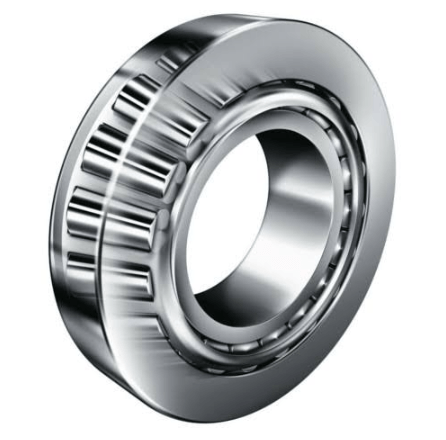
Four-point contact ball bearings use specially shaped raceways that allow each ball to make contact with the raceways at four potential points under suitable loading conditions. This geometry enables the bearing to accommodate axial loads from different directions and, depending on its design, radial loads as well.
The actual performance depends on the bearing’s internal geometry, dimensions, material properties, clearances, and operating conditions. Not every four-point contact bearing has the same load capacity, so engineers should consult the manufacturer’s specifications when evaluating a particular model.
In industrial applications, these bearings may be used in assemblies that need controlled rotation and support within a limited space. Their suitability depends on the relationship between the bearing design and the forces imposed by the complete machine.
It is also important to distinguish conventional four-point contact ball bearings from large slewing bearings designed to support rotating structures. Both may use four-point contact geometry, but their dimensions, mounting arrangements, and intended applications can differ considerably.
Understanding the Loads Acting on a Bearing
Axial Loads
Axial loads act parallel to the bearing’s rotational axis. They may develop when a machine applies force along its shaft or when a rotating structure carries weight in a direction aligned with the axis.
A bearing must be selected to accommodate the expected axial load under the specified operating conditions. Engineers should consider whether the force acts in one direction or changes direction during operation.
Radial Loads
Radial loads act perpendicular to the rotational axis. They can result from transmitted forces, structural weight, gear interactions, or the arrangement of connected machine components.
The bearing’s radial load capability should be checked against the expected operating conditions. The combined effect of radial and axial forces may differ from the effect of either load considered separately.
Overturning Moments
Large rotating structures can experience overturning moments when a force acts at a distance from the bearing’s center. This can occur in cranes, rotating platforms, and other equipment that supports an offset load.
For slewing applications, the moment capacity of the complete bearing and mounting arrangement is especially important. Engineers must also assess the stiffness of the supporting structures and the fasteners that transfer loads through the assembly.
Applications Across Industrial Sectors
Construction and Lifting Equipment
Construction machinery often contains rotating structures that must carry equipment weight and operational loads. Suitable bearing arrangements help support movement between the rotating assembly and its supporting frame.
Engineers should consider the machine’s load profile, movement range, duty cycle, and applicable safety requirements when selecting a bearing. Installation accuracy and structural stiffness are equally important because the bearing operates as part of a larger mechanical system.
Industrial Automation
Automated equipment may use rotating fixtures, positioning platforms, and other mechanisms that require repeatable movement. Bearing selection can influence rotational resistance, alignment, and the stability of the supported component.
Where positioning accuracy is important, engineers should consider bearing clearance, mounting deformation, drive characteristics, and control-system performance together.
Material Handling Systems
Material-handling equipment can experience repeated loading as it moves products or bulk materials. Bearings used in rotating mechanisms must be compatible with the expected forces and operating frequency.
Dust, moisture, and other contaminants may also influence bearing selection. Suitable sealing and lubrication arrangements can help reduce the risk of contamination-related wear.
Manufacturing Machinery
Manufacturing systems may use bearings in fixtures, rotating tables, gear-driven assemblies, and specialized production equipment. Depending on the design, the bearing may need to accommodate combined loads while maintaining a predictable rotational path.
The operating environment, maintenance schedule, and required service life should all be considered during the selection process.
How to Evaluate a Bearing Supplier
Choosing a supplier involves checking whether the available product and technical support match the application. Buyers should assess several factors before making a decision.
Technical Documentation
A reliable evaluation begins with accurate product information. Buyers should request relevant drawings, dimensions, load ratings, mounting requirements, and operating limitations.
For a replacement project, the existing bearing’s identification and measurements can help narrow the options. However, a visually similar component should not be assumed compatible without checking the specifications.
Manufacturing and Inspection Processes
Bearing performance depends on the quality of the rolling elements, raceways, materials, and manufacturing processes. Dimensional consistency and appropriate quality controls help ensure that the finished component matches its design requirements.
Depending on the application, customers may need material documentation, inspection reports, or other records demonstrating conformity with the agreed specifications.
The level of verification should reflect the consequences of failure and any relevant industry or customer requirements.
Application Engineering Support
Some applications have unusual load combinations, installation restrictions, or environmental challenges. In these cases, technical discussions with the supplier can help clarify the information required for selection.
Engineers should provide the expected axial and radial loads, overturning moments where applicable, rotational speed, duty cycle, and operating environment. Clear information reduces the likelihood of choosing a bearing that meets dimensional requirements but lacks the necessary performance.
When comparing LYHGB Bearing four point bearing suppliers buyers should verify the available product specifications, manufacturing capabilities, technical support, and compatibility with their application. Supplier suitability should be established through relevant documentation rather than general claims alone.
Delivery and Long-Term Support
Delivery schedules can affect maintenance planning and production continuity, particularly when a bearing is required for an urgent replacement.
Buyers should clarify lead times, product identification, packaging requirements, and the documentation supplied with the component. For equipment expected to operate for many years, it may also be useful to understand the supplier’s approach to replacement parts and technical inquiries.
Price remains important, but it should be considered alongside product suitability, quality requirements, and the potential costs associated with an unsuitable component.
Installation Factors That Affect Performance
Even a correctly selected bearing can perform poorly if it is installed incorrectly. Preparation should begin with an inspection of the mounting surfaces and the surrounding structure.
The mounting faces should meet the specified flatness and stiffness requirements. Contamination should be removed before assembly, and the bearing should be positioned according to the manufacturer’s instructions.
Fasteners must match the specified requirements. Tightening should follow the recommended sequence and torque values to reduce the risk of uneven clamping or ring deformation.
Where the bearing forms part of a geared assembly, the gear interface and alignment should also be checked. Incorrect positioning may increase resistance, noise, or uneven contact.
After installation, the system should be checked according to the equipment manufacturer’s commissioning procedure. Unusual noise, vibration, or rotational resistance should be investigated before the machine enters normal service.
Maintenance Practices for Longer Service Life
Routine maintenance helps identify developing problems before they lead to extensive damage. The appropriate schedule depends on the bearing design, operating environment, workload, and manufacturer’s recommendations.
Lubrication is a central consideration because it helps reduce friction and wear at the rolling contacts. The correct lubricant, quantity, and interval should follow the specified maintenance instructions.
Seals and surrounding components should be inspected for damage or contamination. In dusty or wet environments, effective protection against unwanted particles and moisture is especially important.
Maintenance teams should also monitor changes in operating behavior. Increasing noise, vibration, temperature, or rotational resistance may indicate a developing issue, although further inspection is needed to determine the cause.
Recording inspections, lubrication activities, operating hours, and unusual observations can help establish maintenance trends and improve planning.
See also: Making Environmental Testing More Accessible for Product Development
Common Bearing Selection Mistakes
One mistake is selecting a bearing based only on its dimensions. A component that fits the mounting space may still be unsuitable for the applied loads or operating conditions.
Another is ignoring combined loading. Axial and radial forces, along with overturning moments in slewing applications, should be evaluated according to the relevant design method.
It is also unwise to assume that all four-point contact bearings are interchangeable. Differences in internal geometry, capacity, precision, and mounting requirements can affect performance.
Finally, installation and lubrication should not be treated as secondary tasks. Poor mounting conditions or insufficient lubrication can undermine the benefits of an otherwise suitable bearing.
Frequently Asked Questions
1. What are four-point contact ball bearings designed to do?
They are designed to support rotational movement and accommodate specified loads through a raceway geometry that allows four potential contact points per ball under suitable conditions. The actual load capacity depends on the particular design and operating arrangement.
2. What should I provide when requesting a bearing quotation?
Provide the required dimensions, load information, rotational speed, duty cycle, operating environment, mounting arrangement, and any relevant standards. Drawings and identification details for an existing component are useful for replacement projects.
3. How can I help maintain bearing performance after installation?
Follow the manufacturer’s mounting and lubrication instructions, inspect seals and fasteners, monitor unusual operating behavior, and maintain records of servicing. The maintenance schedule should reflect the application and operating environment.
Conclusion
Four-point contact ball bearings can support industrial systems that require controlled rotation and the ability to accommodate specified loads. Their performance depends on choosing the correct design, verifying load requirements, ensuring mounting accuracy, and maintaining suitable lubrication and contamination protection.
Evaluating suppliers through technical documentation, manufacturing quality, engineering support, and long-term service considerations helps buyers make informed decisions. Combined with correct installation and routine inspection, this approach supports reliable bearing operation and more predictable equipment maintenance.