ByJohn A
Understanding Fine Alumina Powder for Advanced Manufacturing
Powder technology is fundamental to many modern manufacturing processes, particularly in ceramics, coatings, polymers, adhesives, and composite materials. Fine alumina powder is valued for the combination of chemical stability, hardness, thermal characteristics, and controllable particle properties offered by aluminum oxide.
However, working with very fine particles requires careful attention to particle size, surface area, agglomeration, dispersion, and processing conditions.
What Is Fine Alumina Powder?
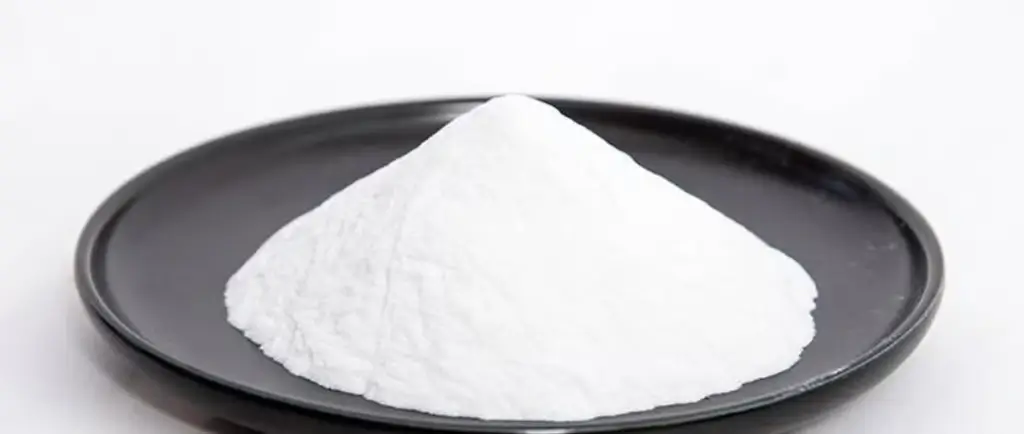
Fine alumina powder consists primarily of aluminum oxide particles with dimensions significantly smaller than those found in conventional coarse grades.
Depending on the production method, these powders can exhibit high surface area and distinctive particle structures.
Such characteristics can influence how the powder behaves during mixing, compaction, coating, or composite production.
Read Also: How Businesses Can Build a Stronger Digital Presence in a Competitive Market
Particle Size
Particle size is a fundamental specification.
Smaller particles can provide greater surface area, but they may also have stronger tendencies to form agglomerates.
Manufacturers should therefore select a particle size that balances the desired final properties with practical processing requirements.
The correct specification depends on the application.
Surface Area
High specific surface area can increase interaction between particles and surrounding materials.
In a ceramic formulation, this may influence sintering behavior.
In a polymer or coating, it can affect viscosity and dispersion.
Surface area should therefore be considered alongside particle size and surface chemistry.
Managing Agglomeration
Agglomeration is a common consideration when processing fine powders.
Particles can cluster together because of surface forces.
If these clusters remain intact during formulation, the material may not distribute evenly.
Manufacturers can investigate mixing equipment, dispersing agents, surface treatments, and addition procedures to improve uniformity where appropriate.
Ceramic Manufacturing
Alumina is widely used in technical ceramics.
Fine powder can be processed into components requiring controlled density, hardness, wear resistance, or thermal stability.
Manufacturers need to carefully control powder preparation, forming, drying, and firing conditions because each stage can influence the final ceramic microstructure.
Polymer and Composite Systems
Fine alumina can also be used as an inorganic component in polymer composites.
The filler may be selected to modify mechanical, thermal, electrical, or dimensional properties.
Successful composite development depends strongly on achieving uniform filler distribution and suitable interaction between the alumina and polymer matrix.
Coating Formulations
In coatings, fine particulate materials can affect surface properties and formulation behavior.
Alumina may be investigated for applications where hardness, durability, or thermal characteristics are relevant.
The coating chemistry and curing process must be considered when selecting particle characteristics.
Adhesive Systems
Adhesive manufacturers may also investigate fine alumina as a functional filler.
The material can influence viscosity, mechanical characteristics, and thermal behavior depending on the adhesive formulation.
Testing at different loading levels can help determine how the powder affects processing and final performance.
Choosing a Suitable Powder
Before purchasing fine alumina, manufacturers should examine:
- Particle size
- Particle-size distribution
- Specific surface area
- Purity
- Surface chemistry
- Moisture content
- Dispersion characteristics
- Packaging
The importance of each factor depends on the intended application.
For example, ceramic manufacturers may focus heavily on purity and particle distribution, while coating producers may place greater emphasis on dispersion and surface interaction.
Processing and Storage
Fine powders should be stored in suitable sealed packaging to reduce contamination and moisture exposure.
During processing, manufacturers should use procedures appropriate for handling fine particulate materials.
Equipment should be selected according to the required mixing or dispersion level.
Technical information related to nano alumina powder can be useful when evaluating fine aluminum oxide materials for different industrial applications.
Quality Control
Raw-material testing can help manufacturers maintain consistent production.
Depending on the application, quality checks may include particle size, surface area, purity, moisture, bulk density, and appearance.
Production batches should be monitored against established specifications.
This approach helps identify material changes before they affect large quantities of finished product.
Frequently Asked Questions
1. What industries use fine alumina powder?
It can be considered for ceramics, coatings, polymers, adhesives, composites, and other advanced material applications.
2. Why does agglomeration matter?
Agglomerates can prevent uniform distribution and may change processing behavior or final material properties.
3. What is the most important specification?
There is no single specification that applies to every application. Particle size, surface area, purity, surface chemistry, and dispersion should be evaluated according to the intended use.
Conclusion
Fine alumina powder provides manufacturers with a versatile inorganic material for developing advanced products. Its performance depends on careful control of particle characteristics, formulation compatibility, dispersion, and processing.
A combination of suitable material specifications, controlled handling, laboratory testing, and consistent quality management can help manufacturers achieve reliable results across different production environments.